
For small and micro-business owners, maintaining HR compliance is no longer just about avoiding fines; it is about protecting cash flow and building the trust necessary to keep a team stable.
The 2026 Salary Mood: Loyalty with a NumberThe start of the year brings a shift in how Dutch employees view their earnings.
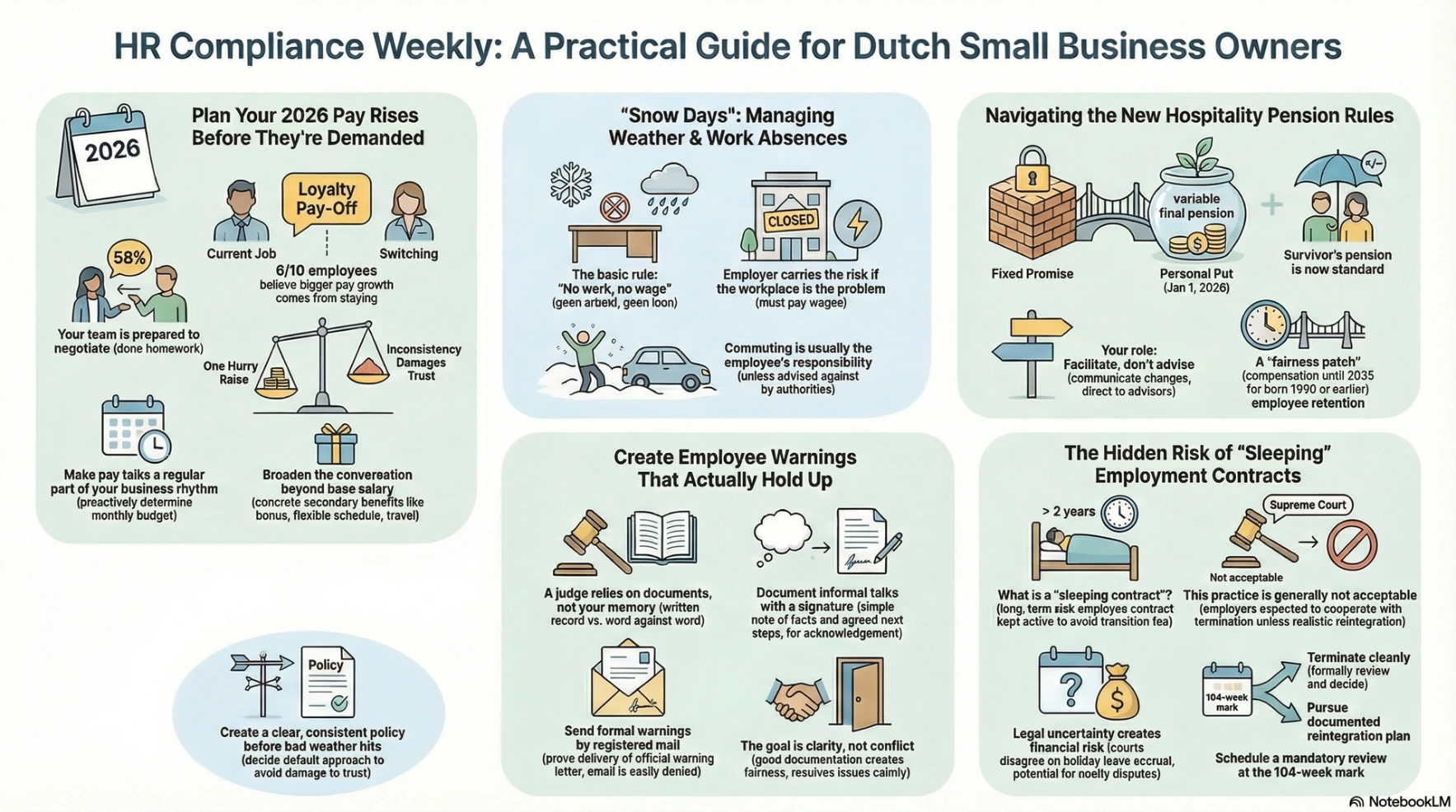
Data indicates that six out of ten employees expect their most significant pay growth in 2026 to come from their current employer.
While this suggests a reduction in abrupt resignations, it means employers must prepare for more deliberate, well-researched salary negotiations.To manage this without straining margins, experts suggest:
Budgeting monthly, not just annually: Understand what your cash flow can carry on a month-to-month basis before making promises.
Focusing on secundaire arbeidsvoorwaarden: In the Netherlands, employment conditions beyond base salary—such as flexible schedules, travel reimbursement, and home-working support—are vital tools for negotiation, provided they are concrete and written down.
Tightening administrative cycles: Ensuring invoicing and debt collection are efficient prevents payroll decisions from being made during a cash crunch.Hospitality’s New Pension RealityAs of 1 January 2026, the Pensioenfonds Horeca & Catering has moved to a new system.
The most practical change is the shift from a fixed yearly accrual to a personal pension pot (persoonlijk pensioenvermogen) for each worker.
While the old-age pension premium remains steady at 16.8%, a new survivors’ pension premium of 0.34% has been introduced, with the cost split equally between employer and employee.Employers should be aware that employees born in 1990 or earlier may be eligible for compensation between 2026 and 2035 to account for previous system subsidies.
Your role as an employer is to facilitate these changes through clear communication and updated payroll setups, while avoiding the trap of giving direct financial advice.
Operational Risks: Weather and DocumentationWinter weather in the Netherlands often raises the question of who carries the risk when the workday is disrupted.
While the baseline rule is "no work, no wage" (geen arbeid, geen loon), this is countered by the principle that the employer carries the risk if the business is closed or systems are down.
Generally, commuting is the employee's responsibility, though "Code Red" weather warnings from the KNMI expect reasonable adjustments from employers to ensure safety.
Beyond the weather, protecting your business requires rigorous documentation. When trust frays, a judge will not rely on memory; they require a clear timeline of dates, concrete issues, and expectations.
Written Records: After any corrective conversation, create a note detailing the discussion and have the employee sign for acknowledgement.
Registered Mail: For formal warning letters, use registered signed mail (aangetekende brief) to ensure you have evidence of delivery, as email can be easily disputed in court.
Resolving "Sleeping" ContractsThe "sleeping contract" (slapend dienstverband)—where a contract is left open after two years of sickness to avoid transition payments—remains a legal focal point.
A December 2025 ruling clarified that employees in a sleeping contract do not have a right to paid annual leave, because paid leave is intended for recovery from work, which is not occurring.
However, employers must remain cautious as some 2025 rulings have suggested EU law might conflict with this Dutch stance.
The best course of action is to review sick-leave cases at the 104-week mark and decide whether to terminate or continue reintegration to avoid ambiguous, long-term financial exposure.
Managing HR compliance is like maintaining a ship’s hull: you don’t wait for a storm to check for leaks. By documenting agreements and understanding new regulations today, you ensure the vessel remains watertight regardless of the weather.